FRUITS OF THE MOOD

FRUITS OF THE MOOD
My blogs are dedicated to great singers from all over the world, great actors and actresses, music and memories.
Here you will find personal montages and many rare videos.
Visit also my YouTube channel, by johnxxx20000.
Blossoms will run away -
Cakes reign but a day.
But memory like melody,
Is pink eternally
(Emily Dickinson)

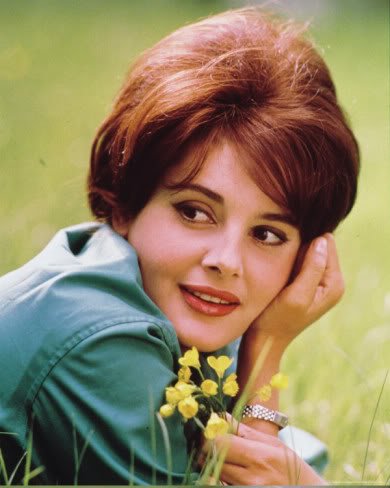
Rossana Podestà


Here is a tribute to cult actress Rossana Podestà.
Rossana Podestà, born Carla Dora Podestà (1934-2013) was a Libyan-born actress, who worked mainly in Italy from the 1950s to the 1970s.
She was born in Tripoli, in the Italian colony of Libya. She spent her first years there, moving to Rome after World War II. At sixteen she was discovered by director Léonide Moguy during the preparation of the cast for the film Domani è un altro giorno; this inaugurated a career in which she participated in sixty films, in Italy and abroad.
In Italy, she resided in Dubino (Sondrio province). She married and then divorced movie producer Marco Vicario. She subsequently lived with the famous mountain climber, explorer and journalist Walter Bonatti.
Podestà's most memorable role was as Helen in Helen of Troy, produced by Robert Wise in 1956. She could not speak English so she learned her lines by rote with a voice coach. The movie gave Podestà international exposure, and she performed alongside a young Brigitte Bardot. Thanks to her starring in the Mexican film Rosanna, she became very popular in Latin America.
Podestà also starred in the movie Ulisse (1955), directed by Mario Camerini, and in the sixties and seventies she acted in some romantic movies, including Paolo il caldo and Il prete sposato which lead to a double page of five half-naked pictures in the U.S. Playboy of March 1966.
Her last performance was in Secrets secrets (1985), directed by Giuseppe Bertolucci.
Enjoy Rossana Podestà's sublime beauty!


Janis Paige


Here are two songs performed in her inimitable style by legendary and glamorous actress Janis Paige.
Janis Paige (born Donna Mae Tjaden in 1922 - she died in 2024, at the age of 102 years!) was an American film, musical theatre and television actress.
Born in Tacoma, Washington, Paige began singing in public at age five in local amateur shows. She moved to Los Angeles after graduating from high school and was hired as a singer at the Hollywood Canteen during World War II.
A Warner Bros. agent saw her potential and signed her to a contract. She co-starred in Romance on the high seas (1948), the film in which Doris Day made her movie debut. 
Paige appeared on Broadway and was a huge hit in a 1951 comedy-mystery play, Remains to be seen, co-starring Jackie Cooper. She also toured successfully as a cabaret singer. 
Stardom came in 1954 with her role as Babe in the Broadway musical The pajama game. She was on the December 1954 cover of Esquire magazine, where she was featured in a seductive pose taken by American photographer Maxwell Frederic Coplan. 
After six years away, Paige returned to Hollywood in Silk stockings (1957), which starred Fred Astaire and Cyd Charisse, the Doris Day/David Niven comedy Please don't eat the daisies (1960), and as a love-starved married neighbor in Bachelor in paradise (1961) with Bob Hope. A rare dramatic role was as Marion, an institutionalized prostitute, in The caretakers (1963).
Paige returned to Broadway in 1963 in the short-lived Here's love. In 1968, when after nearly two years Angela Lansbury left the Broadway production of the musical Mame to take the show on a limited US tour, Paige was the star chosen to be the first Broadway replacement, and she admired the character, saying, “She's a free soul. She can be down, but never out. She's unbigoted. She says what she thinks with a kind of marvelous honesty, which is the only way to say anything.”
Paige appeared in touring productions of musicals such as Annie get your gun, Applause, Sweet Charity, Ballroom, Gypsy: A musical fable, and Guys and dolls
During the 1955-1956 television season, Paige starred in her own CBS situation comedy, It's always Jan, co-starring Merry Anders, as Janis Stewart, a widowed mother, and her two female roommates played by Anders and Patricia Bright.
Paige had a recurring role as Auntie V, Tom Bradford's erstwhile sister, in Eight is enough. Paige played the role of Auntie V in 5 episodes (1977-1981). 
In 1956 she made a LP entitled Let's fall in love.
Paige was given a star on the Hollywood Walk of Fame at 6624 Hollywood Blvd on February 9, 1960.
Enjoy Janis Paige's dynamic style!


Blue skies / Singin' in the rain (with Dinah Shore, 1960)

Satin and silk (from Silk stockings)


Eleanor Powell


Here are two examples of the unique artistry of the queen of tap dancing Eleanor Powell.
Eleanor Powell (1912-1982) began studying ballet aged six and began dancing at nightclubs in Atlantic City before she was a teenager. From the age of sixteen, she began studying tap and started appearing in musical revues on Broadway, before making her Hollywood debut as a featured dancer in the movie George White's scandals (1935).
She was known as one of Metro-Goldwyn-Mayer's top dancing stars during the golden age of Hollywood in a series of musical vehicles tailored especially for her talents, such as Born to dance (1936), Broadway melody of 1938 (1937) and Rosalie (1937). In 1965, she was named the world’s greatest tap dancer by the Dance Masters of America.
Astaire and Powell danced to Porter's Begin the beguine, which is considered by many to be one of the greatest tap sequences in film history. Astaire was somewhat intimidated by Powell, who was considered the only female dancer ever capable of out-dancing Astaire. In his autobiography Steps in time, Astaire remarked, “She put 'em down like a man, no ricky-ticky-sissy stuff with Ellie. She really knocked out a tap dance in a class by herself.” Frank Sinatra said, “You know, you can wait around and hope, but you'll never see the likes of this again.”
Powell was reintroduced to audiences in the popular That's entertainment! documentary in 1974, and its sequels That's entertainment Part II (1976) and That's entertainment! III (1994) and the related film That's dancing! (1985) which spotlight her dancing from films such as Broadway melody of 1940, Lady be good, and Born to dance. She is one of only a few performers to be the subject of spotlight segments (as opposed to being included in a montage with other performers) in all four films. That's entertainment! III is notable for including behind-the-scenes footage of her Fascinatin' rhythm routine from Lady be good.
Enjoy Eleanor Powell's incredible talent!


Boogie woogie (1943)

Duchess of Idaho (cameo) (1950)

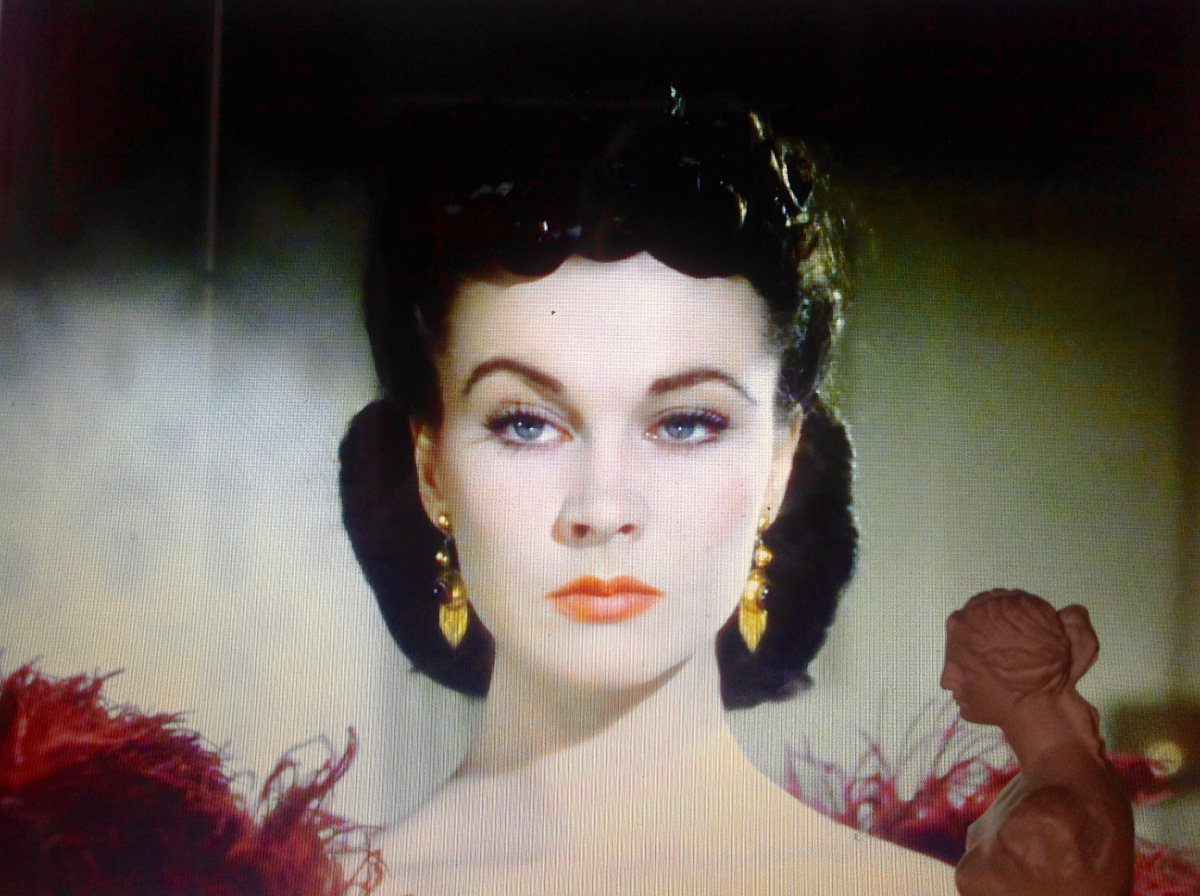
Vivien Leigh


Here is a tribute to legendary actress Vivien Leigh.
Vivien Leigh (born Vivian Mary Hartley in Darjeeling, India, 1913-1967) was an English stage and film actress. She won two Academy Awards for best actress, for her iconic performances as Scarlett O'Hara in Gone with the wind (1939) and Blanche DuBois in the film version of A streetcar named Desire (1951), a role she had also played on stage in London's West End in 1949. She also won a Tony Award for her work in the Broadway musical version of Tovarich (1963).
Her mother tried to instill an appreciation of literature in her daughter and introduced her to the works of Hans Christian Andersen, Lewis Carroll and Rudyard Kipling, as well as stories of Greek mythology and Indian folklore.
At the age of six, Vivian was sent by her mother to the Convent of the Sacred Heart (now Woldingham School) then situated in Roehampton, southwest London. One of her friends there was future actress Maureen O'Sullivan, two years her senior, to whom Vivian expressed her desire to become “a great actress”.
After completing her drama school education, Leigh appeared in small roles in four films in 1935 and progressed to the role of heroine in Fire over England (1937). Lauded for her beauty, Leigh felt that her physical attributes sometimes prevented her from being taken seriously as an actress. Despite her fame as a screen actress, Leigh was primarily a stage performer. During her 30-year career, she played roles ranging from the heroines of Noël Coward and George Bernard Shaw comedies to classic Shakespearean characters such as Ophelia, Cleopatra, Juliet, and Lady Macbeth. Later in life, she performed as a character actress in a few films. She namely appeared in the films The Roman spring of Mrs. Stone (1961) and Ship of fools (1965).
Leigh's last screen appearance in Ship of fools was both a triumph and emblematic of her illnesses that were taking root. Producer and director Stanley Kramer, who ended up with the film, planned to star Leigh but was initially unaware of her fragile mental and physical state. Later recounting her work, Kramer remembered her courage in taking on the difficult role, “She was ill, and the courage to go ahead, the courage to make the film – was almost unbelievable.” Leigh's performance was tinged by paranoia and resulted in outbursts that marred her relationship with other actors, although both Simone Signoret and Lee Marvin were sympathetic and understanding. In one unusual instance during the attempted rape scene, Leigh became distraught and hit Marvin so hard with a spiked shoe, that it marked his face. Leigh won the L'Étoile de cristal for her performance in a leading role in Ship of fools.
Quoted in a 2006 biography of Olivier, Olivia de Havilland defended Leigh against claims of her manic behaviour during the filming of Gone with the wind: “Vivien was impeccably professional, impeccably disciplined on Gone with the wind. She had two great concerns: doing her best work in an extremely difficult role and being separated from Larry [Olivier], who was in New York.”
Gone with the wind brought Leigh immediate attention and fame; but she was quoted as saying, “I'm not a film star – I'm an actress. Being a film star – just a film star – is such a false life, lived for fake values and for publicity. Actresses go on for a long time and there are always marvellous parts to play.” The film won 10 Academy Awards including a best actress award for Leigh, who also won a New York Film Critics Circle Award for best actress.
At the time, the public strongly identified Leigh with her second husband Laurence Olivier, who was her spouse from 1940 to 1960. Leigh and Olivier starred together in many stage productions, with Olivier often directing, and in three films. Although her career had periods of inactivity, in 1999 the American Film Institute ranked Leigh as the 16th greatest female movie star of classic Hollywood cinema.
Leigh was considered to be one of the most beautiful actresses of her day, and her directors emphasised this in most of her films. When asked if she believed her beauty had been an impediment to being taken seriously as an actress, she said, “People think that if you look fairly reasonable, you can't possibly act, and as I only care about acting, I think beauty can be a great handicap, if you really want to look like the part you're playing, which isn't necessarily like you.”
Director George Cukor described Leigh as a“consummate actress, hampered by beauty”, and Laurence Olivier said that critics should “give her credit for being an actress and not go on forever letting their judgments be distorted by her great beauty.”
Garson Kanin shared their viewpoint and described Leigh as “a stunner whose ravishing beauty often tended to obscure her staggering achievements as an actress. Great beauties are infrequently great actresses – simply because they don't need to be. Vivien was different; ambitious, persevering, serious, often inspired.”
Leigh explained that she played “as many different parts as possible” in an attempt to learn her craft and to dispel prejudice about her abilities. She believed that comedy was more difficult to play than drama because it required more precise timing and said that more emphasis should be placed upon comedy as part of an actor's training. Nearing the end of her career, which ranged from Noël Coward comedies to Shakespearean tragedies, she observed: “It's much easier to make people cry than to make them laugh.”
In 1969 a plaque to Leigh was placed in the Actors' Church, St Paul's, Covent Garden, London. In 1985 a portrait of her was included in a series of United Kingdom postage stamps, along with Sir Alfred Hitchcock, Sir Charlie Chaplin, Peter Sellers and David Niven to commemorate "British Film Year".
Enjoy Vivien Leigh's fabulous beauty!


Trailer of Gone with the wind

Trailer of Ship of fools

Roles